
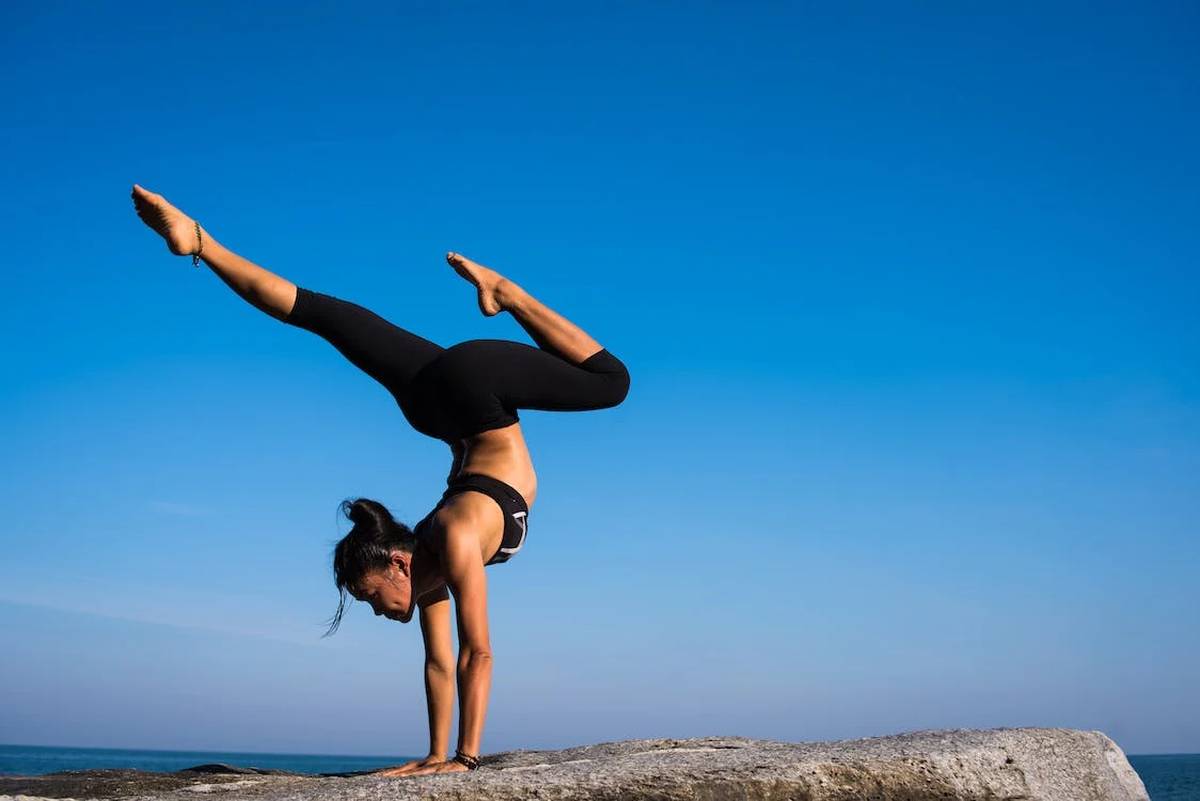
Awesomesports we offer yoga classes as the worldwide trend among professional athletes in both cyclical and acyclic sports
The physical intensity that professional athletes suffer during a season, the emotional and mental wear and tear that end up exacerbating stress and both muscle and bone injuries.
That is why the practice of yoga attracts more and more athletes to their training, as it allows them to increase their ability to concentrate, as well as improve their performance, flexibility, strength and resistance during the season, and even achieve physical recovery. more efficient.
The regular practice of yoga prevents injuries, improves muscle function and combats stress, three key components of sports performance.
We offer special yoga classes dedicated to professional athletes, meditation and breathing techniques.
What reasons can lead an athlete to want to add the
yoga to your training plan?
What are the benefits of yoga that contribute to the improvement
in sports results?
GREATER FLEXIBILITY
When talking about yoga, the first thing that comes to mind is its asanas (postures). Therefore, it is not difficult to associate its practice with the improvement of flexibility.
Asanas help us increase the ability to move muscles and joints.
Some studies say that a weekly yoga session for 6 weeks is enough to notice improvements in this basic quality of physical condition.
REDUCES STRESS
In today's society, many people experience stress, which in turn can lead to psychological health problems such as depression, mental exhaustion, and hostility.
Throughout the year of training, matches, footballers can also face that stress.
Practicing yoga lowers cortisol levels, a hormone
released in response to stress.
INCREASES STRENGTH
Following a routine with different asanas on a regular basis increases muscle tone and strength. Yoga postures are held for long periods of time, which causes isometric contractions of the muscles, generating a
strength gain. A study published in the International Journal of Physical
Education, Sports and Health demonstrated that asanas strengthen the arms, shoulders, legs, back, buttocks, and abdomen. These gains improve body stability and prevent injuries, because yoga works to strengthen the muscle fibers that support and surround the larger muscles.
used in these sports. This means that a more balanced and optimally functional overall strength is produced.
HELP THE RECOVERY
For optimal sports performance, training is just as important as recovery. To avoid overtraining and to continue performing at an adequate level, it is necessary for athletes to understand that recovery periods after physical activity are essential. Yoga is a form of active rest, which means that, with its practice, the body uses biological mechanisms and metabolic and cellular processes of tissue repair and the generation of molecules, such as enzymes, which allow it to continue performing at a good level.
According to research published in the International Journal of Multidisciplinary Research and Development, yogic breathing helps to circulate and detoxify lymph, a liquid that runs through the lymphatic system. This speeds up on a 15% the
recovery after physical exercise and eliminates fatigue.
GREATER BALANCE AND COORDINATION
Yoga is different from other exercises, since it generates movement without causing tension or imbalances in the body. Therefore, its practice is an ideal complement to different forms of physical exercise and an advantage in any sport.
Coordination and balance improve with yoga because the different postures are combined with breathing and movement. Greater balance and coordination means better control in body movement, which manifests itself in more efficient technique.
IMPROVES SLEEP
"Practicing yoga increases serotonin levels so it helps you sleep better," explains Dr. Murali Doraiswam, author of a Duke University study that included a review of more than 100 research papers on yoga. Serotonin (5-HT) is a neurotransmitter that, in addition to regulating mood or appetite, increases the production of melatonin, a hormone that participates in sleep cycles.
To achieve a peaceful rest, serotonin is also involved in stress control and body temperature. For this reason, a study by the University of Barcelona and the University of the Balearic Islands published in the Revista de Psicología del Deporte recommends that athletes carry out quality control of sleep, due to the importance of its restorative characteristics and its relationship positive with sports performance, training and competition.
IMPROVES THE STATE OF MOOD
There are states of mind that facilitate performance, and generating positive attitudes and emotions is a key element in the proper functioning of each person in sports. Serotonin (5-HT) not only has a positive effect on sleep, but is also involved in mood regulation. In fact, the
Low levels of this neurotransmitter are associated with depressive behaviors.
Some investigations say that practicing yoga on a regular basis produces significant improvements in patients with depression and anxiety in a similar way to physical exercise. In addition, another investigation, published in The Journal of Complementary Medicine, found that there is an increase in another neurotransmitter in yoga practitioners: GABA. The benefits of GABA are numerous, as it participates in improving mood, the ability to concentrate, promotes relaxation, and helps control stress.
HELPS PREVENT INJURIES
Each sport is characterized by highly repetitive movements over a long period of time, which causes certain muscle groups to develop while ignoring others. Imbalances in muscles and joints can
cause injury.
Many yoga poses, such as Downward Facing Dog (Adho Mukha Svanasana), mobilize and extend the back, shoulders, triceps, gluteals, hamstrings, rectus femoris, and calves, strengthening the muscles and
providing flexibility to the body.
IMPROVES CONCENTRATION
Concentration is the ability to maintain focused attention on an object or on the task at hand without distractions, and it is key to achieving sporting success. In yoga, concentration is worked mainly through Tratak (fixing the gaze), Nasagra-drishti (nasal contemplation), Brahmadya-drishti (frontal contemplation).
IMPROVES RESISTANCE
Although athletic performance is multifactorial, it is clear that endurance plays an important role in sport. According to science, yoga improves both aerobic and anaerobic endurance.
It seems that although yoga is not an aerobic exercise, yogic breathing (pranayama) increases the capacity of the lungs by improving the flexibility of the ribcage and allows the lungs to fully expand.